Washers & dryers
Laundry day doesn't have to cost you a load. Whether you're using your current washer and dryer or shopping for new ones, a few smart choices can help save energy, water and money, while still giving you great results.
Quick ways to clean up on savings
Give your home an Energy Health Check
Take our free Energy Health Check to see how much your large everyday appliances could be costing to run and uncover opportunities to save.
Tell us how you use appliances like your washing machine, dryer, hot water, air conditioner, fridges/freezers, and we'll give you estimated cost breakdowns and personalised saving tips.
A few minutes today could help you uncover savings for tomorrow.
Only have 60 seconds?
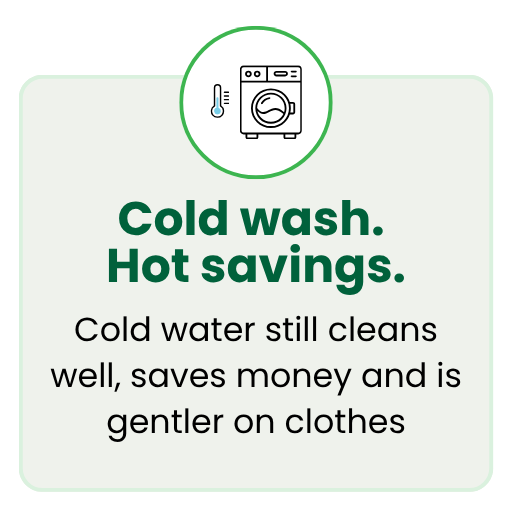
Use our Hot Water and Laundry Calculator to estimate your costs and see how changes like shorter showers and washing your clothes in cold water could help reduce your bill.
More information
Buying a new washer or dryer? Here’s what to look for
A typical washing machine or dryer can last for up to a decade, so a little research before you buy can add up to savings every time you do a load.
Check the Energy Rating Label
- All washing machines and dryers sold in Australia must display an Energy Rating Label. More stars means the appliance uses less electricity to do the same job, helping keep running costs down.
Choose the right size for your household
- Bigger isn’t always better. An oversized machine can use more energy if it’s not filled properly, so pick a size that matches how much washing you do.
Front loaders are usually cheaper to run
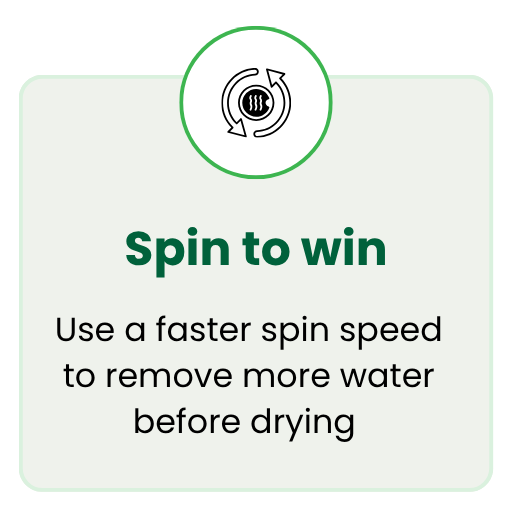
- Front‑loading washing machines are generally more energy and water efficient than top loaders, and they spin more water out of clothes, reducing drying time.
Consider a heat pump dryer
- Heat pump dryers use much less energy than conventional dryers. They often cost more upfront, but are significantly cheaper to run over their lifetime.
Look for water efficiency
- Washing machines also carry a Water Rating Label. Using less water often means using less energy, especially when heating water.
You can learn more about Energy Rating Labels and Water Rating Labels on the Australian Government’s Energy website.
Types of washing machines
Front loaders:
- Typically the most energy and water efficient, helping you save over the long term.
Top loaders:
- Usually cheaper to buy and may offer shorter wash cycles.
Washer-dryer combos:
- Provide the convenience of washing and drying in one appliance, but typically take longer to dry. They’re often found in apartments or unit complexes where space is limited.
Twin-tub washing machines:
- Separate wash and spin tubs, where you’ll need to manually fill the tub with water, wash clothes, shift the clothes from the wash tub to the spin tub. Used mostly in rural or remote locations where water availability may be limited.
Whatever type you choose, look for strong Energy Rating and Water Rating labels to help compare running costs and efficiency between models.
Types of clothes dryers
Heat pump dryers:
The most energy-efficient option, using less electricity by reusing heated air.\
Vented dryers:
Lower upfront cost, but generally less energy efficient
Washer-dryer combos:
Provide the convenience of washing and drying in one appliance, but typically take longer to dry. They’re often found in apartments or unit complexes where space is limited.