Understand your home bill
Your electricity bill should feel simple, not stressful.
This page walks you through each part of your bill in clear, friendly steps, so you always know what you’re looking at and what it means for you.
Think of it as a guided tour. We’ll show you where everything sits, why it’s there and how it all adds up.
What's on your bill
Here’s a quick look at some of the sections you’ll see on your bill. Click into each one to learn more.
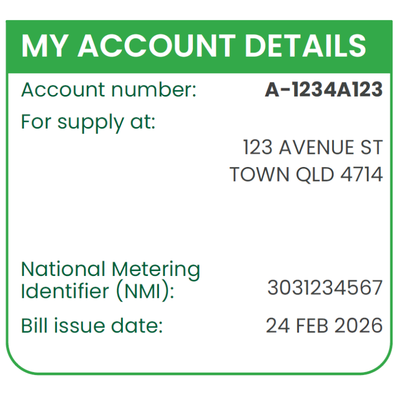
1. Your account details
This is where your key information lives - your account number, supply address, NMI (National Metering Identifier) and bill issue date. These help us find your details quickly when you get in touch.
2. Amount due and due date
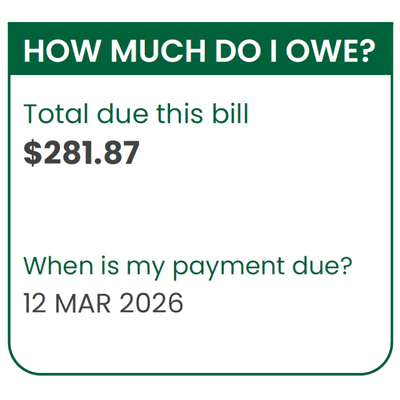
Right at the top, you’ll see how much you owe (including GST) and when payment is due.
If you’re in credit, your bill will show $0.00 due - check your bill summary to see your full credit balance.
If you have money still owing from a previous bill, this section only shows the new charges. The total balance sits in the bill summary.
3. Ways to pay
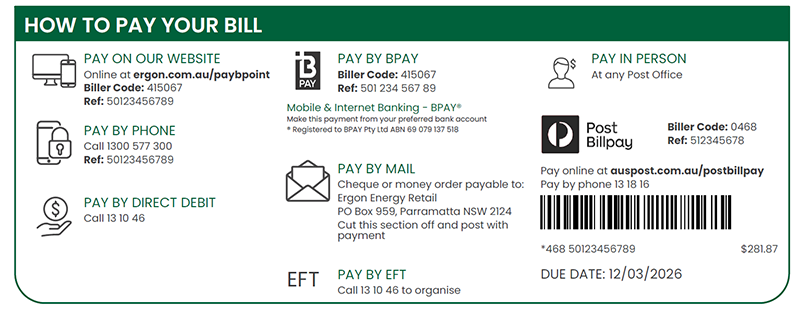
Here you’ll find every payment option available and the reference number needed for each one.
It’s important to check your reference number each time you pay - sometimes they change.
4. Your meter and readings
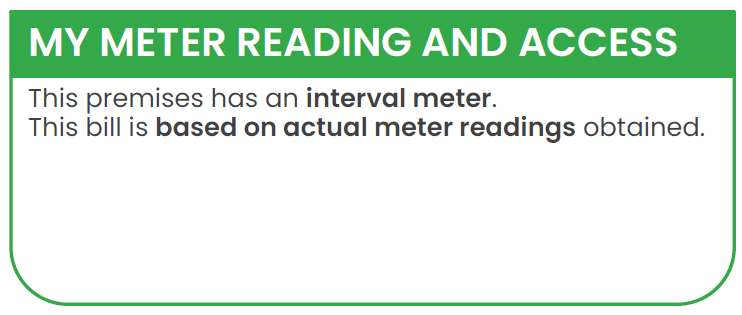
This shows your meter type (basic or interval) and the readings used to calculate your bill.
If your bill says “interval meter,” it means you have a smart meter.
5. Your plan and charges
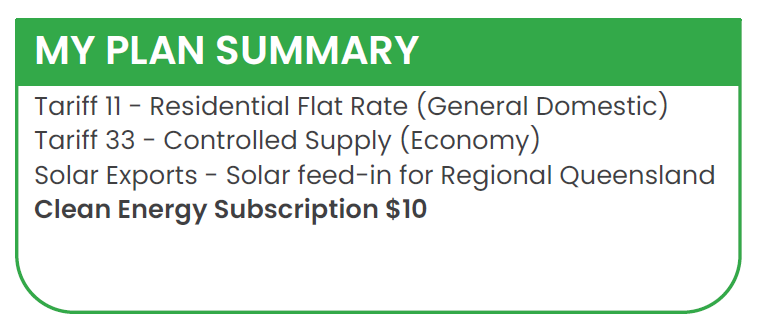
Your plan summary lists all active tariffs at your place and your Clean Energy Subscription amount if it applies.
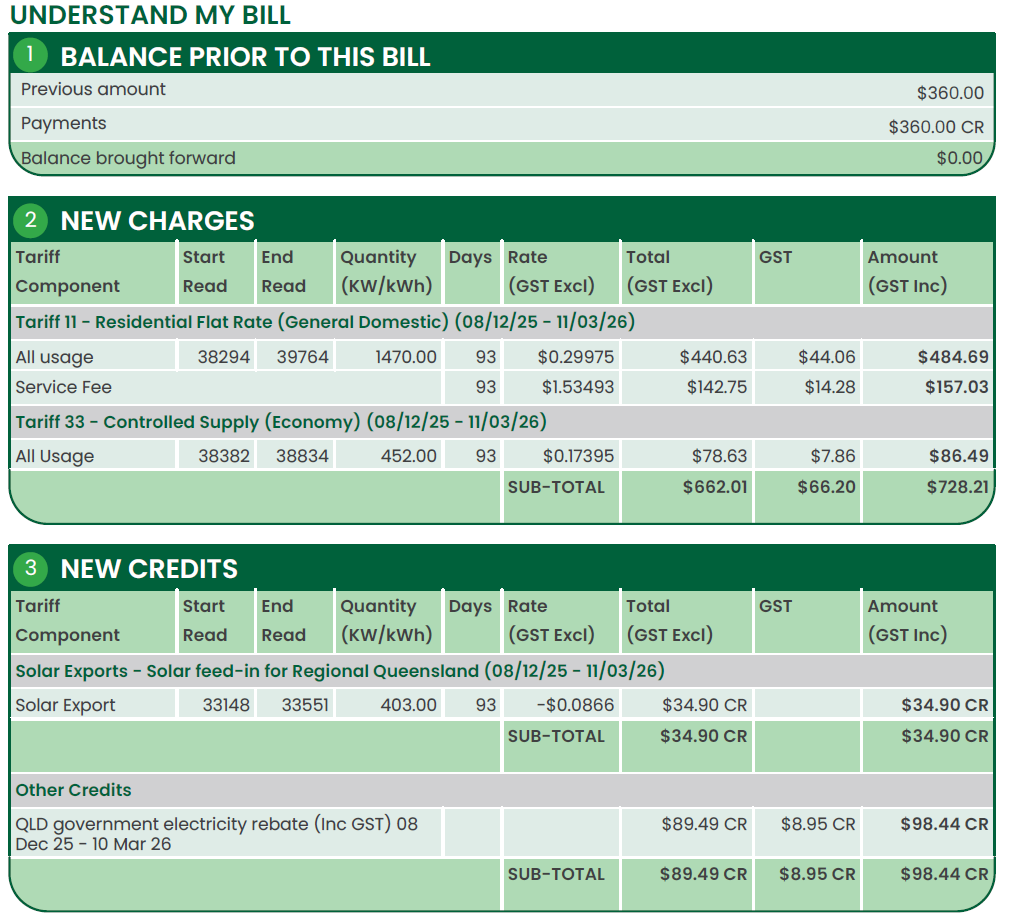
You’ll also see a clear breakdown of your charges on this page, including your balance before this bill, any new charges, and any credits applied (like solar credits or electricity rebates.)
Everything is grouped clearly, so you can easily see where your costs come from and follow along with confidence.
Putting it all together
Your bill works like this:
- We start with your balance brought forward
- Add your new charges
- Subtract any credits or rebates
- What’s left is the total amount due shown
If you choose to donate to the Royal Flying Doctor Service, your donation will appear on your bill under "Other Charges".
- Donations of $2 or more may be tax deductible
- No GST applies to donations
- You can download your history of bills (which show your donations) on My Account under “billing history”. Log in or register today.

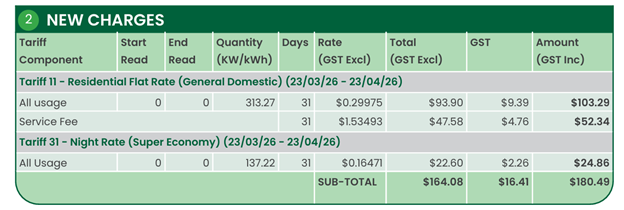
If you have a smart meter, start and end readings will always display as zero. This is because of how smart meters record and send data. Instead of sending just a start and end reading, they send detailed usage data across the whole billing period.
That means your bill is based on the total energy recorded over time, rather than two individual meter reads.
6. Your usage and solar exports
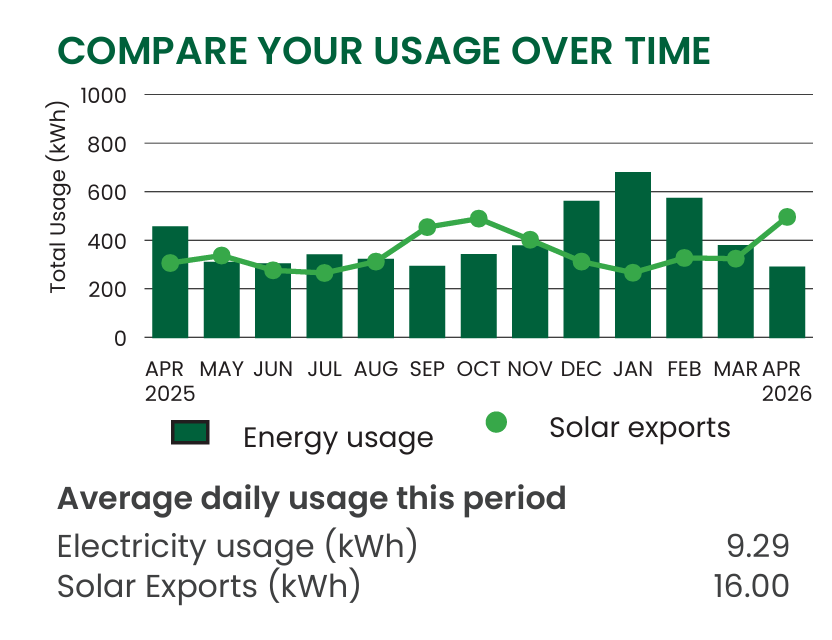
See how your current electricity use and solar exports compare with previous bills. Each bar represents one bill, making it simple to spot trends.
You can also see your average usage and exports for your current billing period.
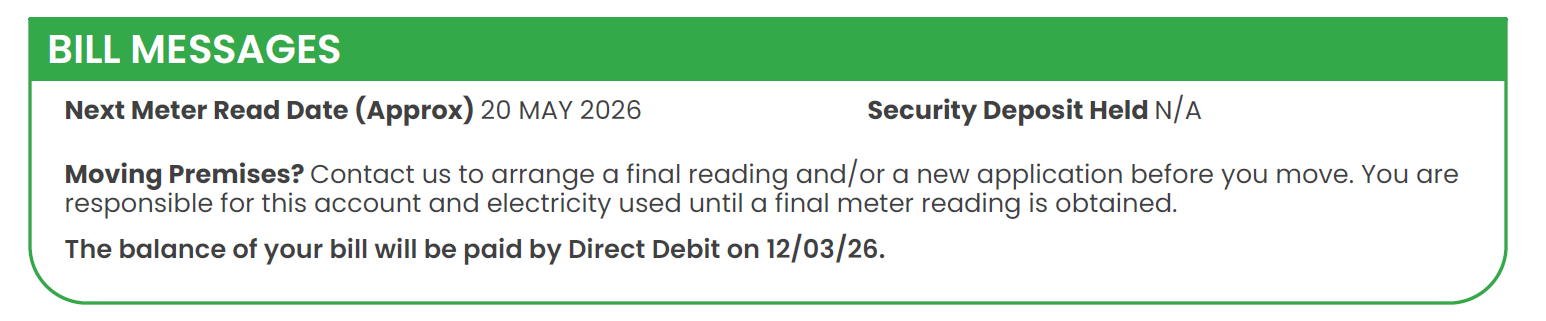
7. Extra information and messages
This section shows:
- Your next meter read date (for basic meters)
- Security deposit details
- Other handy messages, including direct debit updates.
8. How to contact us
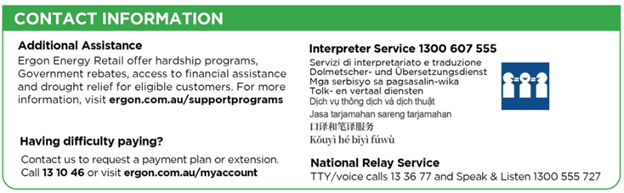
All our key contact numbers are here, so it’s easy to reach out.\
You’ll also find:
- Support and assistance program contacts
- Interpreter services
- National Relay Service details.
Whatever you need, we’re here to help.
9. Payments and balances
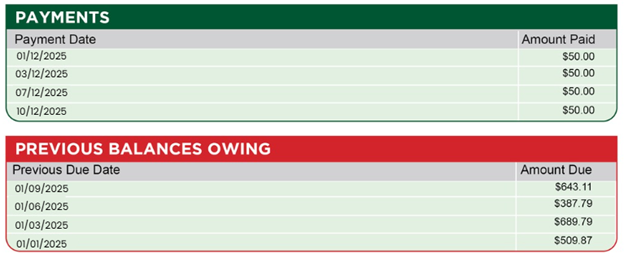
This is where you’ll see:
- Payments made since your last bill
- What you owe on your current and previous bills.
Download the full bill guide 📩
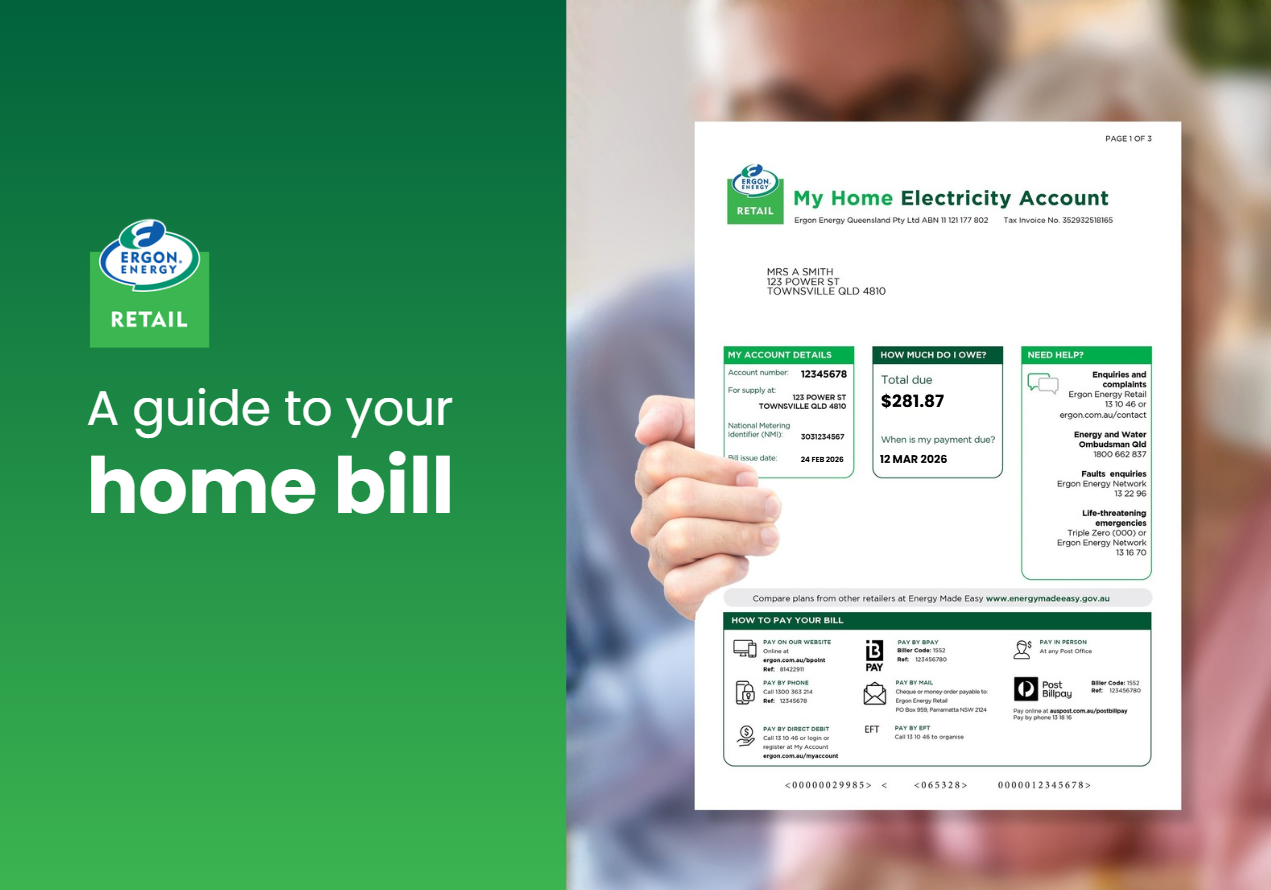
Want a step‑by‑step guide you can save or print? We’ve got you covered.
👉 Download a guide to your home bill (PDF)
A simple, friendly breakdown of your bill with examples to make everything clearer.
Need a hand? We’ve got you.
If something doesn’t look right or you want help understanding your bill, get in touch with our regional Queensland team.
We’re locals, we care, and we’ll make sure you feel confident about your bill.